Showing posts with label Chaparral. Show all posts

Thursday, April 21, 2011

The Outback

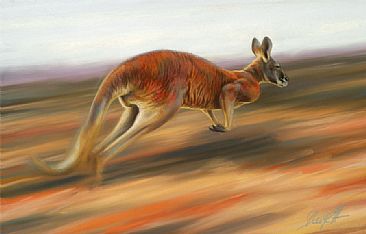
No, not the resturant, unfortunately. My family and I live in in the Austrialian chaparral where there are no delicious steaks only dry grass and dirt. I am a Great Red Kangaroo, the biggest of all the marsupials. We are herbivores, eating mostly a varity of different grasses and scrub bushes. We do not need a great deal of water as we obtain most of it through the plants we eat. Although our main predator, the Thylacine or Tasmanian Tiger is now extinct, we are still hunted by dingos. The farmers of Austrailia, our natural habitat, also hunt us because we tend to eat their grass and crops during drought seasons. Because we are like hippes, and only eat natural, organic produce, we are only predators to grass.

Although I am not apart of this food web, it shows many of my surrounding inhabitants.


This is the biome that I live in. A chaparral is created in specific areas when there is a hot, dry climate and a high atmospheric perssure.

My main predator, the Tasmanian Tiger. The tiger  is now extinct due to hunting.

The chaparral is a  hot, dry biome, much like the dessert. The annual rainfall in a chaparral is about 17-30 inches a year. The average tempature during the summer is anywhere from 64-100 degrees F. In order The chaparral is a very for my species and frankly, any other type of animal to live in the chaparral, we need to have certain adaptations. The Great Red Kangaroo has adapted to the chaparral biome by adjusting it's size, 5 senses, posistion of eyes, parenting skills, feet, body structure and strength, and water preservation. Although the chaparral may seem boring, it is a treasure that you will love when it is opened!


-Hallie the 'Roo

Wednesday, April 20, 2011

Background Vocabulary


In order to uderstand my blog, here is a little background information.

Chaparral- a dense growth of scrubs or scrub trees

Abiotic- any non living peices of an ecosystem or habitat.

Biotic- Living pieces of an ecosystem or habitat

Niche- An animals talent, role or job

Habitat- The environment that holds necessities for the life of an animal

Decomposer- An orginism that breaks down living substances

Scavenger- An animal that searches for dead animals to eat

Consumer- An animal that feeds on plants and other animals

Producer- A plant that is able to produce it's own food through photosynthisis

Commensalism- An interaction between two species in which one benifits and the other isn't affected

Mutualism- An interaction between two species in which both species benifit

Parasitism- An interaction between two species in which one species is harmed and the other benifits

Food Chain- Tells or shows what orginisms eat and where the energy moves in an ecosystem or habitat

Food Web- Interconnected and overlapping food chains

Adaptation- A characteristic that enables an orginism to live and reproduce in a particular envirronment